When it comes to glossary quick facts, key window tint terms include VLT (visible light transmission), TSER (total solar energy rejected), and emissivity, which measure darkness, heat blocked, and radiant heat performance. Autobahn Performance Window Films carry a limited lifetime warranty against bubbling, peeling, cracking, and discoloration, giving Chicago-area clients a clear benchmark for comparing film quality and installation standards.
Key Window Tint Terms and Performance Metrics
- VLT measures visible light transmission percentage, determining how much light passes through window film.
- TSER rating indicates total solar energy rejected, helping you choose film for heat protection and comfort.
- Emissivity and shading coefficient assess thermal performance, affecting your vehicle’s interior temperature regulation significantly.
- MC Window Tinting LLC in Alsip, IL helps drivers decode tint terminology for confident film selection.
What Do Core Window Tint Terms Really Mean?
Core window tint terms describe how a film performs, how long it lasts, and what protection it carries once installed. MC Window Tinting LLC, based in Alsip, IL, works with this vocabulary daily while guiding local clients through Fleet & Commercial Vehicle Window Tinting, home window film, and commercial glass projects. Understanding window tint terminology is the first step toward choosing the right film. Darkness level and material alone do not tell the full story.
A reliable tint term quick guide separates terms into two buckets: performance specs and protection terms. Clients benefit from scanning a short set of glossary quick facts before comparing quotes, rather than decoding jargon mid-conversation with an installer.
What does “limited lifetime warranty” mean on a tint quote?
A limited lifetime warranty typically covers defects from manufacturing but may not cover issues from accidents or misuse. Industry language typically groups these defects as follows:
- Discoloration or fading of the film
- Cracking or crazing of the surface
- Bubbling or peeling from the glass
- Delamination, where film layers separate
Why do film descriptions read like a technical spec sheet?
Manufacturers build film term cards to standardize how films get compared across brands and installers. Each card condenses warranty scope and material behavior into a few lines, letting a property manager or vehicle owner judge long-term value instead of guessing from price alone.
Which Film Type Terms Should You Know?
Film type terms describe the materials and manufacturing methods that determine how a tint performs over time. Grade matters as much as darkness. The window film industry, much like other aftermarket product categories, offers different grades of film, ranging from basic decorative sheets to advanced performance composites engineered for heat and UV control.
Reading a set of glossary quick facts before comparing products helps separate marketing language from actual performance specs. A short tint term quick guide typically groups films by construction method rather than color alone. Two tints can look identical while performing very differently in direct sunlight.
What makes ceramic tint different from other film types?
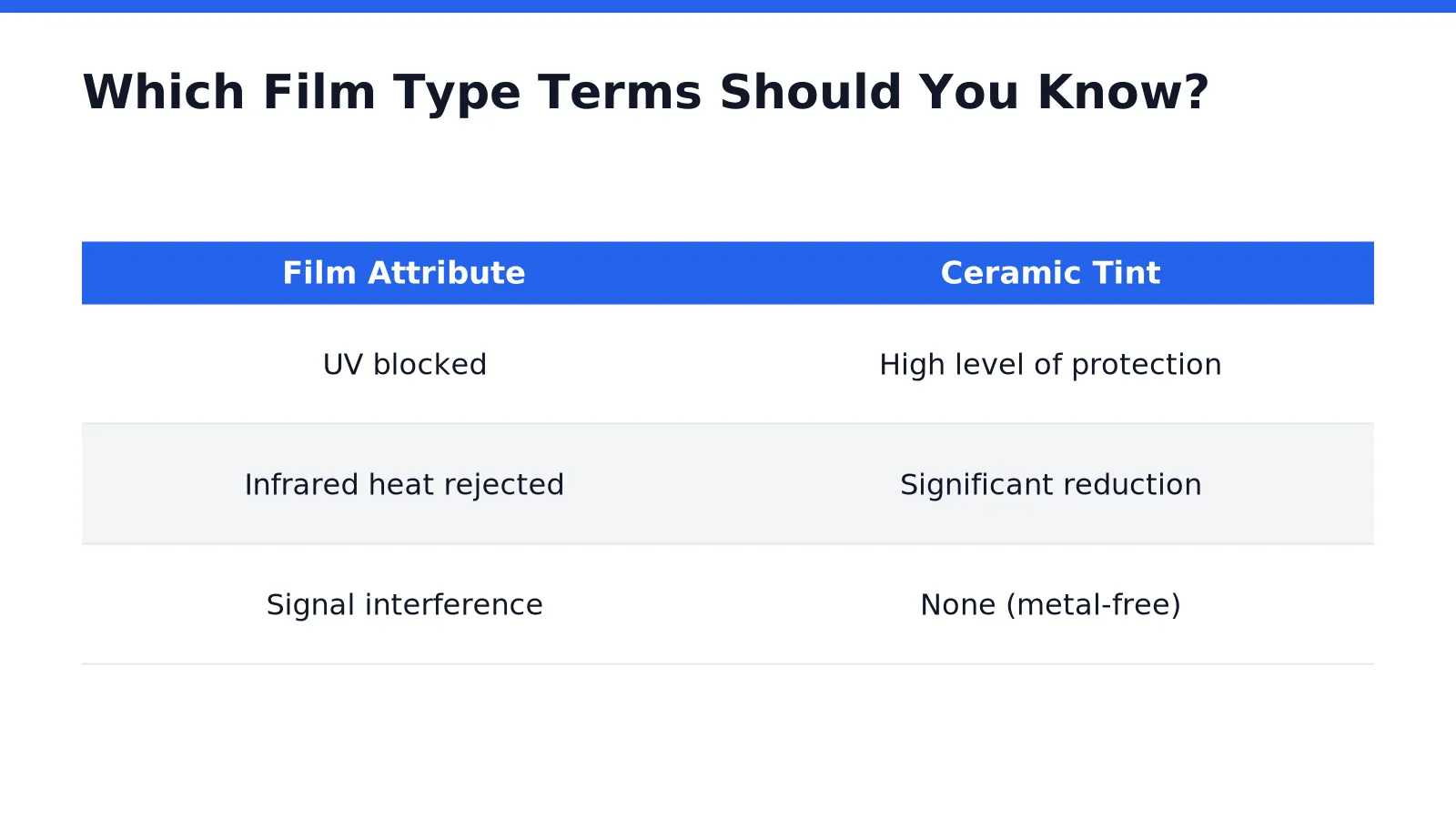
Ceramic tint relies on nano-ceramic particles embedded in the film layer. Ceramic tint blocks a significant portion of UV radiation and helps reject infrared heat, which reduces cabin heat buildup and interior fading over time. That heat rejection benefit matters most to drivers parked in direct sun for long stretches.
Does ceramic tint affect phone or GPS signal?
No. Ceramic tint contains no metal, so it does not interfere with cell phone, GPS, Bluetooth, or vehicle sensor signals. This sets it apart from older metallic films, which sometimes caused signal interference.
Quick comparison for film term cards:
| Film Attribute | Ceramic Tint |
|---|---|
| UV blocked | High level of protection |
| Infrared heat rejected | Significant reduction |
| Signal interference | None (metal-free) |
What Do Warranty Terms Like No-Fault Mean?
Warranty language on a window film invoice protects the buyer, not just the installer. A no-fault warranty option lets the original purchaser of an Autobahn film installation replace the film one time if it suffers accidental damage, no questions asked about cause. Property managers and vehicle owners in the Chicago Metro area benefit most when they understand these terms before a problem occurs, not after.
Coverage extends beyond the first owner in many cases. A transferable warranty applies when a subsequent owner, someone who bought a tinted vehicle or building secondhand, needs a qualified film replacement approved by an authorized dealer.
What failures does a window film warranty actually cover?
Terms like demetalizing and delamination describe specific ways film can fail over years of sun exposure. Demetalizing happens when the metal layer inside the film breaks down, often showing as cloudy patches. Delamination refers to the film layers separating, which causes bubbling or peeling. A limited lifetime warranty against these issues, plus discoloration and cracking, protects the investment long after installation day.
Common terms worth knowing:
- No-fault: one-time replacement for accidental damage, original owner only
- Transferable: replacement option for a new owner, pending dealer approval
- Demetalizing/delamination: covered failure modes under lifetime warranty terms
Alsip, IL based teams routinely walk clients through these definitions during consultations.
FAQ
What does VLT measure?
VLT stands for visible light transmission and measures the percentage of light passing through window film. This figure determines how dark or light a tinted window appears once installed.
What does TSER indicate on a window tint spec sheet?
TSER stands for total solar energy rejected and shows how much heat a film blocks. Drivers and property owners use this rating to choose film suited for heat protection and comfort.
Ceramic tint uses nano-ceramic particles embedded in the film layer to block UV radiation and reject infrared heat. This construction reduces cabin heat buildup and interior fading over time.
Conclusion
In closing, understanding window tint terminology empowers you to make informed decisions about your vehicle, home, or commercial property. Whether you’re evaluating UV protection levels, film types, or installation techniques, this reference guide clarifies the language professionals use to describe quality solutions. Armed with these definitions, you can confidently discuss your tinting needs and recognize the craftsmanship that distinguishes premium installations from rushed work. Clear communication about film performance and durability ensures you invest in results that protect your interiors. Enhance your spaces for years to come.